Key takeaways
- Laser and magnetic fusion experiments both set records in 2025, but they are laboratory results, not power plants.
- ITER, the large international project, now expects research activities to begin in 2034 and deuterium-tritium operation in 2039.
- Private fusion companies raised $4.48 billion in the year to July 2026, the highest annual total in six years, and 71% of those surveyed expect grid power by the 2030s.
Fusion power attracts record funding and regular headlines about new laboratory records. Readers searching for the state of the technology find two very different pictures: results that keep improving, and project timetables that keep moving. Both are accurate, and they describe different things.
This explainer sets out what the most recent results measure, how the biggest public project has changed its schedule and what a survey of the private industry says about its own timelines. The figures come from the laboratories involved, a trade survey and engineering press coverage published between July 2024 and July 2026.
Two Ways to Confine Fusion Fuel, and How Success Is Measured
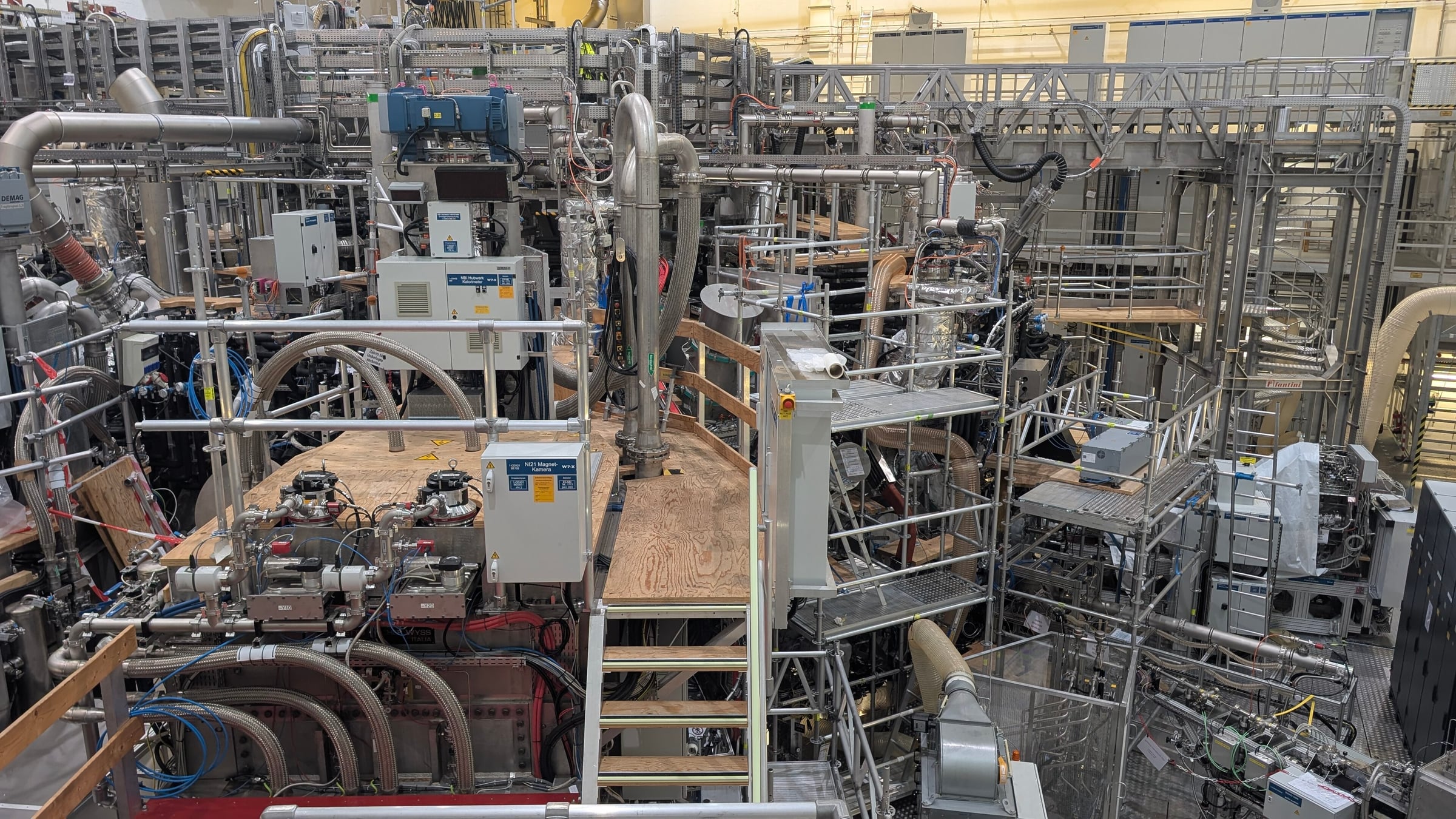
Fusion machines fall into broad families. The Fusion Industry Association’s 2026 survey of 56 companies found that 48% use magnetic confinement, 21% inertial confinement and 14% a hybrid called magneto-inertial. Within magnetic designs, a tokamak confines plasma using an electric current inside the plasma, while a stellarator, such as Germany’s Wendelstein 7-X, confines it using external magnets, according to a Princeton Plasma Physics Laboratory (PPPL) feature on EurekAlert. The National Ignition Facility (NIF), run by Lawrence Livermore National Laboratory, takes another route and fires lasers at a target.
Researchers use different yardsticks for each. For magnetic machines, a key measure is the triple product, which multiplies plasma density, temperature and confinement time, the PPPL feature explains. For laser experiments such as NIF, the headline number is target gain, which Lawrence Livermore reports as a record 4.13.
Key Figures
NIF record, 7 April 2025: 8.6 megajoules of fusion energy from 2.08 megajoules of laser energy, a target gain of 4.13. Wendelstein 7-X: record long-pulse triple product held for 43 seconds. ITER: research activities from 2034, deuterium-tritium operation 2039. Private fusion funding: $4.48 billion in the year to July 2026.
The 2025 Records
On 7 April 2025 NIF produced 8.6 megajoules of fusion energy, according to Lawrence Livermore National Laboratory’s annual report. The lasers delivered 2.08 megajoules to the target in a pulse with 456 terawatts of peak power, giving a record target gain of 4.13. The previous record yield was 5.2 megajoules, set in February 2024.
In Germany, the Wendelstein 7-X stellarator, operated by the Max Planck Institute for Plasma Physics, set a record for the triple product in pulses longer than 10 seconds, ahead of the JET tokamak even though its plasma volume is about three times smaller, the PPPL feature reports. The record performance lasted 43 seconds. Ion temperatures were above 20 million degrees Celsius, with peaks up to 30 million.
The researchers were careful about what this shows. PPPL’s Novimir Pablant noted that 30 seconds was long enough to observe the relevant physics, and that extending pulses to 30 minutes or more faces reliability challenges. Thomas Klinger of the Max Planck institute called raising the triple product to tokamak levels during long pulses an important milestone. The feature does not say whether the result had been peer reviewed.
ITER’s Longer Timetable
ITER, the international tokamak project backed by China, the US, Russia, India, South Korea and Euratom, reset its schedule in July 2024. According to The Chemical Engineer’s report that month, research activities now begin in 2034, deuterium-deuterium plasmas with full magnetic energy are expected in 2036, and deuterium-tritium operation moves back four years to 2039. The original target for first plasma was 2025, so the schedule has slipped by about a decade.
The revised plan could add about €5 billion. The Chemical Engineer reports that the budget has grown from €5 billion in 2006 to €20 billion. It lists the causes as supply chain disruption, including factory shutdowns, workforce reductions and shipping backlogs during the Covid-19 pandemic, and equipment faults, notably cracks found in the piping of three vacuum vessel thermal shields in 2021. The ITER Organization described the original roadmap as "neither realistic, nor achievable, nor optimal".
ITER director general Pietro Barabaschi said the organisation is immediately entering a real research phase.
Both are accurate, and they describe different things.
Private Money and Private Timelines
Outside the public programmes, funding has risen sharply. World Nuclear News reported on 14 July 2026 on the Fusion Industry Association’s 2026 report, which says the industry raised $4.48 billion in the year to July, the highest annual total in the six years it has reported. Cumulative funding stands at $14.24 billion. The largest raises were Commonwealth Fusion Systems with $863 million, Proxima Fusion with $518 million, Helion Energy with $465 million and Inertia Enterprises with $450 million, as summarised by World Nuclear News.
The report also records commercial steps. TAE Technologies and General Fusion have listed shares on the Nasdaq. Five companies have a power purchase agreement, offtake agreement or similar commitment, including Microsoft with Helion and Google with Commonwealth Fusion Systems. Six have siting agreements and four more are evaluating options.
On timing, 71% of the companies surveyed expect a plant to deliver power to the grid "by the 2030s". That is the industry’s own expectation, collected by a trade body that represents it.
What Remains Unsolved
The survey identified the main challenges. Funding is the main short-term issue, according to World Nuclear News. The longer-term challenges are neutron-resilient materials, power efficiency and tritium self-sufficiency.
Two further points follow from the sources. First, the NIF and Wendelstein 7-X results are measured against laboratory benchmarks, such as laser energy delivered to a target or triple product in a single pulse. Each was a single experimental result rather than the continuous operation a commercial power plant would need. Second, the long-pulse record lasted 43 seconds, and the researchers themselves describe the step to much longer pulses as a reliability challenge.
For readers following the field, the milestones to watch are concrete: whether ITER keeps its 2034 start, whether the companies with power purchase agreements move from agreements to plants, and whether longer-duration plasma results are published with peer review. The more telling signals will be sustained operation and the first plants connected to a grid.
Sources
- National Ignition Facility 2025, Lawrence Livermore National Laboratory
- Wendelstein 7-X sets new performance records in fusion research, Princeton Plasma Physics Laboratory via EurekAlert
- ITER postponed by a decade in 5bn overhaul, The Chemical Engineer
- Fusion industry raised USD4.5 billion in past year, report says, World Nuclear News