Key takeaways
- Democrats won 54 Senate seats and could end up with in excess of 260 House seats, flipping both chambers from Republican control.
- NBC News reported that affordability, corruption, immigration and the Iran war were key issues, and gas prices spiked after the war began in late February.
- The results set up divided government for the final two years of Trump’s term, with Democrats positioned to block nominees Trump puts forward.
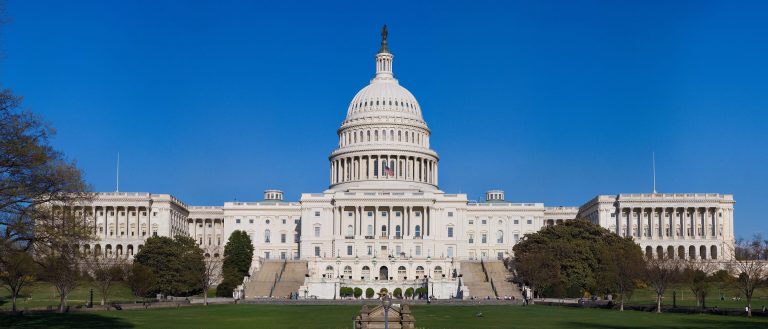
Democrats won control of both chambers of Congress on November 3, 2026, in an election that Al Jazeera described as a major rebuke to Trump’s Republicans. With most races called by November 4, Democrats had won 54 Senate seats and led in one more, while Republicans had won 44 and led in one. In the House, Democrats had won 228 seats so far and led in a further 34, and they could end up with in excess of 260 seats.
It is the first time in 20 years that a Republican president has lost both chambers in a single midterm. It sets the stage for a final two years in which President Trump will face a Democratic Congress capable of blocking nominees and launching investigations, with legislators hostile to his agenda. Vice President JD Vance blamed the Iran war for Republican losses in the midterms, while Trump himself acknowledged the outcome, telling Fox News that Democrats ‘did a good job’.
The Senate Flips
Democrats flipped seats in states that were barely on their radar a year ago, in some cases defeating candidates backed by enormous outside spending. Billionaire Elon Musk funneled $224 million into Texas alone to boost Republican nominees, including Senate candidate Ken Paxton. In Georgia’s governor race, billionaire Rick Jackson spent more than $200 million of his own money and lost to Keisha Lance Bottoms. In Texas, Democrat James Talarico defeated Republican Ken Paxton, the first Democratic Senate win in the state in more than 30 years. In Kansas, Adam Hamilton defeated Republican incumbent Roger Marshall, and a Democrat has not won a Senate seat in Kansas since 1932. Democrats also easily held onto a Senate seat in Georgia.
In Michigan, Abdul El-Sayed has defeated Mike Rogers for senator, becoming the first Muslim ever elected to the US Senate. In Illinois, Juliana Stratton’s win marks the first time in US history that three Black women will be in the Senate at the same time. In South Carolina, Annie Andrews won a seat for which President Trump had backed Darline Graham. The Democrats have not had such a clear majority in the Senate since 2008. In North Carolina, Trump had endorsed Michael Whatley, who was beaten by Democrat Roy Cooper.
2026 Midterm Results at a Glance
Democrats won 54 Senate seats and led in one more, while Republicans won 44 and led in one. In the House, Democrats had won 228 seats so far, had flipped 25 Republican seats, and were leading in 34 others. Democrats are set to have what could be their largest majority in nearly two decades. Republicans had held 53 Senate seats and 220 House seats after the 2024 elections. Alaska and Mississippi remained uncalled as of November 4. Democrats now have 28 governors, up from 23 after the 2024 midterms.
Historic Governors Too
Democrats now have 28 governors, up from 23 after the 2024 midterms, while 20 are Republican and two states remain uncalled. In Georgia, Keisha Lance Bottoms became the first Black woman elected governor in the US. In New Mexico, Deb Haaland, a former US interior secretary, became the first Native American woman elected governor of a US state. In California, Xavier Becerra will take over from Gavin Newsom and has become the first Latino elected governor in a state where 40 percent of the population is Hispanic or Latino.
What Drove the Vote
NBC News reported that corruption, affordability, immigration and the Iran war were all key issues. Gas prices spiked after Trump and Israeli Prime Minister Benjamin Netanyahu launched the Iran war in late February, with voters frustrated about the cost of living.
Al Jazeera noted that polls were off in 2020 and in 2022, but that this year opinion polls have been in line with voters’ opinions.
An NBC News exit poll found that 43 percent of midterm voters said opposing Trump was one reason they voted as they did. Seventy-one percent of voters, including 41 percent of Republicans, said there was not enough congressional oversight of Trump. Democrats also led Latino voters by 27 points in an NBC News poll released the Sunday before Election Day.
It is the first time in 20 years that a Republican president has lost both chambers in a single midterm.
What Divided Government Means
With full control of the Senate, Democrats are positioned to block nominees Trump puts forward. As the minority party, Democrats lacked the power to issue subpoenas and schedule oversight hearings, a power that changes in January. Democrats have signaled an ambitious agenda, with potential inquiries into the business interests of the president and his family. House Speaker Mike Johnson will not run for House minority leader after Democrats flipped Congress.
Trump retains his veto power, meaning legislation passed by Congress will almost certainly need his support to become law. Democrats’ agenda may ultimately become a messaging tool for the 2028 election season.
Trump struck a combative tone ahead of the new Congress. In an interview on the Pod Force One podcast published Monday, he said he would become ‘Mr. Veto,’ though he added that at some point the two sides would probably make deals. Representative Robert Garcia of California is expected to become chair of the House Oversight Committee when the new Congress convenes in January.
Uncalled Races and What to Watch
As of November 4, Alaska and Mississippi were the only two Senate races the AP had not called. In Mississippi, absentee ballots received after Election Day would be counted because of a Supreme Court ruling.
Come January, when the new Congress is sworn in, President Trump is certain to face an onslaught of investigations and congressional oversight. Senate Minority Leader Chuck Schumer is expected to return as Senate majority leader. In the House, Representative Hakeem Jeffries is on the cusp of becoming the first Black House speaker in US history.
Sources
- Democrats win control of House and Senate: Key US midterms takeaways, Al Jazeera
- Democrats capture full control of Congress, NBC News projects, NBC News
- Live updates: Democrats win control of the House and Senate, NBC Washington
- Democrats win full control of Congress, ushering in a new era of divided government, OPB / NPR
- 2026 midterm election results: House, Senate, CNBC