Key takeaways
- Netanyahu’s bloc had 53 of the Knesset’s 120 seats in the 28 October count, eight short of the 61 needed for a majority, according to Ynet and the Jerusalem Post.
- The opposition bloc’s 48 seats and the Arab parties’ 19 add up to 67, although Democrats leader Yair Golan put the opposition total at 65 at an earlier stage of the count.
- The opposition is divided over whether to rely on Arab-led parties, and Golan argues it should form a government with their support.
Israel’s parliamentary election on 27 October has produced no clear winner. Counts published on 28 October gave Prime Minister Benjamin Netanyahu’s bloc 53 seats in the 120-member Knesset, eight short of the 61 needed for a majority, according to the Jerusalem Post and Ynet. The opposition bloc had 48 seats and the Arab parties 19. Golan put the opposition total at 65 when the Arab parties are included, and Ynet reported he was referring to an earlier stage of the count.
Ynet reported that Israel could remain under a caretaker government while coalition negotiations unfold. The shekel weakened as the results emerged, Ynet noted.
Where the Count Stands
The Jerusalem Post reported that, with almost five million votes counted, Likud was projected to enter the Knesset with 26 seats, Gadi Eisenkot’s Yashar with 21 and B’Yachad, led by Naftali Bennett and Yair Lapid, with 12. The Joint List was projected at 12, Ra’am at seven and the Democrats at eight.
Counts moved during the day. Ynet reported that Ra’am rose from four to six projected seats earlier in the morning. In a later update, Ynet had the Joint List on 13 and Ra’am on six, still 19 Arab-party seats in total. Ynet also noted that more than half a million double-envelope ballots, including votes cast by soldiers and other eligible voters outside their assigned polling stations, were expected, with counting due to start around midnight Wednesday, and that the results would remain nearly final rather than fully certified until further checks scheduled for next week.
The IDF reported that 79.9% of military personnel had exercised their right to vote, an increase of 6.2% compared with the previous Knesset election, Ynet reported.
Israel’s 2026 Election at a Glance
Voting took place on 27 October for the 26th Knesset, which has 120 seats and needs 61 for a majority. On 28 October the Jerusalem Post reported 53 seats for Netanyahu’s bloc, 48 for the opposition bloc and 19 for the Arab parties. A first nominee has 28 days, plus a possible 14-day extension, to form a government.
Small Parties and the Threshold
Parties must clear an electoral threshold to enter the Knesset. The Jerusalem Post reported on 22 October that the threshold is 3.25 percent of valid votes, and that a party would need approximately 166,000 votes to enter if turnout matched 2022. Ynet, citing a Taub Center analysis, put the requirement at about 171,000 valid votes at 70 percent turnout, rising to roughly 195,000 if turnout reaches 80 percent.
On 28 October, Ynet reported that in an earlier count, when 60.2% of votes had been processed, the Reservists-Economic party, led by Yoaz Hendel and Yaron Zelekha, was 19,803 votes short of the threshold. Amcha Israel, led by former military officer Ofer Winter, was 54,888 votes below it, making its chances of entering parliament increasingly remote.
Ynet linked Ra’am’s rise from four to six projected seats partly to results from Rahat, a predominantly Bedouin city in southern Israel.
The Arithmetic Behind the Deadlock
Netanyahu’s bloc consists of Likud, United Torah Judaism, Shas, Otzma Yehudit and the Religious Zionism party. The Jerusalem Post put the opposition bloc, made up of Yashar, B’Yachad, Yisrael Beytenu and the Democrats, at 48 seats. The Arab parties were predicted to reach a combined 19 seats.
Opposition leaders disagree on how to use those numbers. Golan argues that the opposition should form a government with Arab party support, and Ynet reported that he said Arab citizens should not be excluded from the political process. Ahmad Tibi of Hadash-Ta’al said the opposition "will be able to form a government if it has the courage", the Jerusalem Post reported. Eisenkot has rejected serving under Netanyahu, including in a rotation government, and other opposition leaders have also ruled out joining a coalition led by the prime minister, the Jerusalem Post reported.
Joint List chairman Yousef Jabareen said his party was prepared to pave the way for removing the Netanyahu, Ben-Gvir and Smotrich government, Ynet reported. The Jerusalem Post said the prospect of a unity government involving Netanyahu and Eisenkot has appeared unlikely.
Eisenkot has called for the leader of the largest party in the opposition bloc to become its candidate for prime minister, the Jerusalem Post reported, but no agreement on the arrangement has been announced within the bloc.
Golan also said that if Netanyahu was considering a Zionist bloc, he should "subtract from his own bloc the 16 Knesset members from the non-Zionist Haredi parties."
Netanyahu Holds His Position
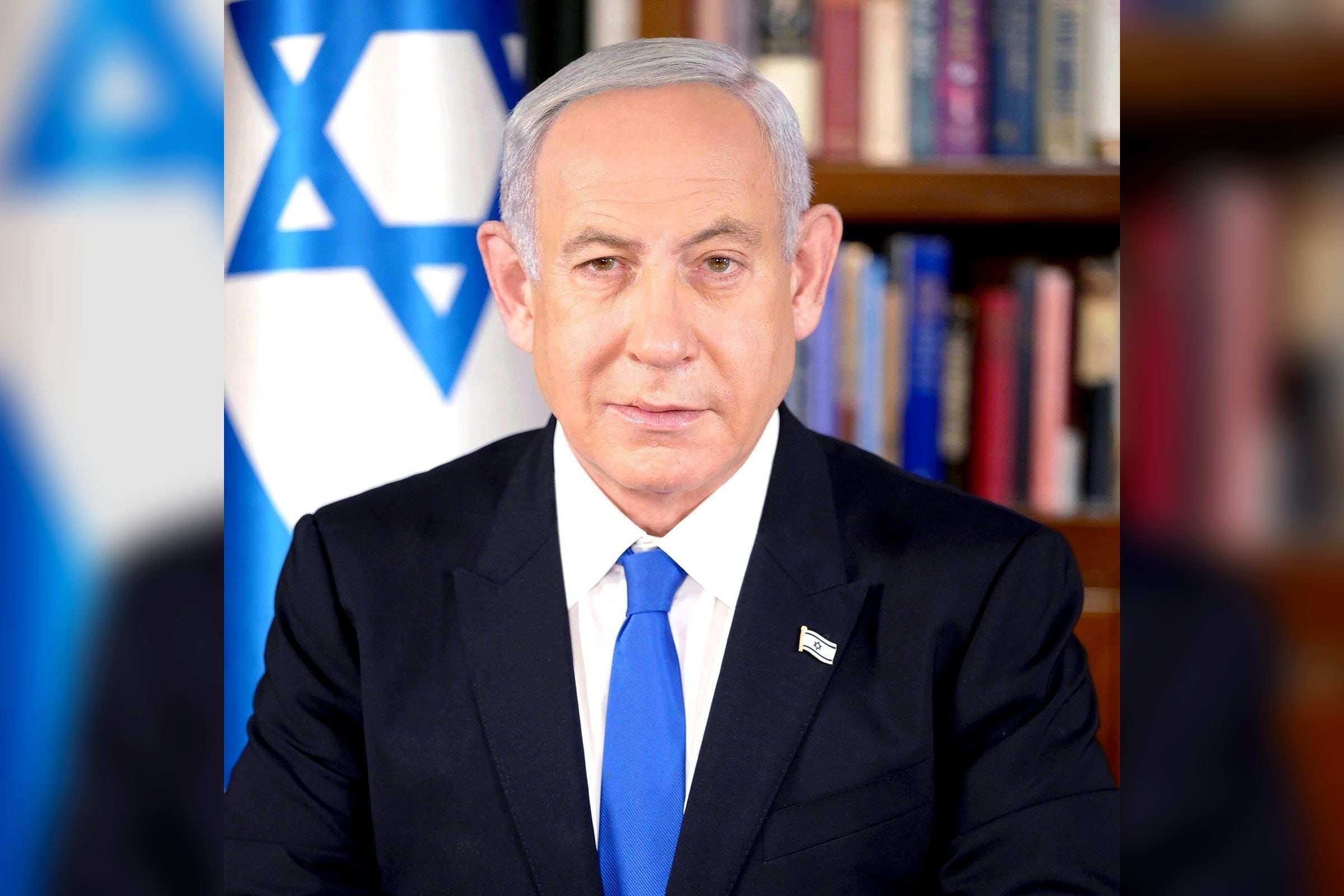
Speaking in Jerusalem overnight, Netanyahu celebrated Likud as the largest party and said, "The Zionist majority must come to its senses and unite", according to Ynet. He twice thanked his loyal partners in the outgoing coalition, which Ynet read as a sign he intends to keep those ties.
Eisenkot told supporters after the exit polls that the public had chosen change and called on Netanyahu to step down, Ynet reported.
Ynet reported, citing sources in President Donald Trump’s circle, that the president does not want Netanyahu to include Ben-Gvir, and likely Smotrich, in the next government. Ynet said no such arrangement has been agreed upon.
Formation has historically taken between 20 and 100 days, it says.
How a Government Forms From Here
The Israel Democracy Institute explains that after consulting the factions, the president nominates one faction leader, usually the head of the largest party but not necessarily. In 2009, it notes, President Shimon Peres chose Netanyahu, the leader of the second-largest party with twenty-seven seats, over Tzipi Livni, whose Kadima party had twenty-eight.
The institute adds that the Basic Law does not explicitly require an absolute majority, so a minority government is legally possible if its supporters outnumber its opponents, though governments formed after elections have almost always enjoyed the confidence of at least 61 Knesset members. Formation has historically taken between 20 and 100 days, it says.
The first nominee has 28 days to build a coalition, with one extension of 14 days.
The Jerusalem Post reported that the exit polls also raised the possibility of a minority government that could win a Knesset confidence vote without an absolute majority of 61 seats. Opposition within the bloc to relying on Arab parties, it added, could complicate such an arrangement.
Caretaker Powers and the Shekel
Ynet explained that a caretaker government retains the same formal powers as a regular government but is expected to show restraint on major decisions with potentially irreversible consequences. Any decision to go to war must be approved by the government or the security cabinet rather than the prime minister alone. The shekel weakened as the results emerged.
Ynet cautioned that a parliamentary majority alone does not guarantee that parties will agree to govern together.
Sources
- Israel election results: Benjamin Netanyahu bloc wins 53 seats, opposition holds 48, The Jerusalem Post
- Israel election results: Netanyahu bloc at 53 seats, Eisenkot bloc at 48 as nearly all votes counted, Ynetnews
- Everything You Need to Know About How a Government is Formed Following Elections, The Israel Democracy Institute
- How many votes will parties need to enter Knesset in upcoming election?, The Jerusalem Post
- No 200,000 votes? Drop out: Israel’s small parties face a much higher election thresh, Ynetnews