Key takeaways
- Italy’s Senate approved the new cinema and audiovisual law on November 4 by 123 votes to none, with bipartisan support from both the governing coalition and the opposition Democratic Party.
- The law creates a Cinema and Audiovisual Agency to take over operational duties from the culture ministry’s film directorate, with a planned start in 2028, though one source puts the transition at 2029.
- The audiovisual union ASA welcomed the reform, but other industry groups warned the new agency may lack real independence, and the statutory minimum for the Cinema and Audiovisual Fund is set to fall from 660 million euros in 2026 to 500 million euros a year from 2028.
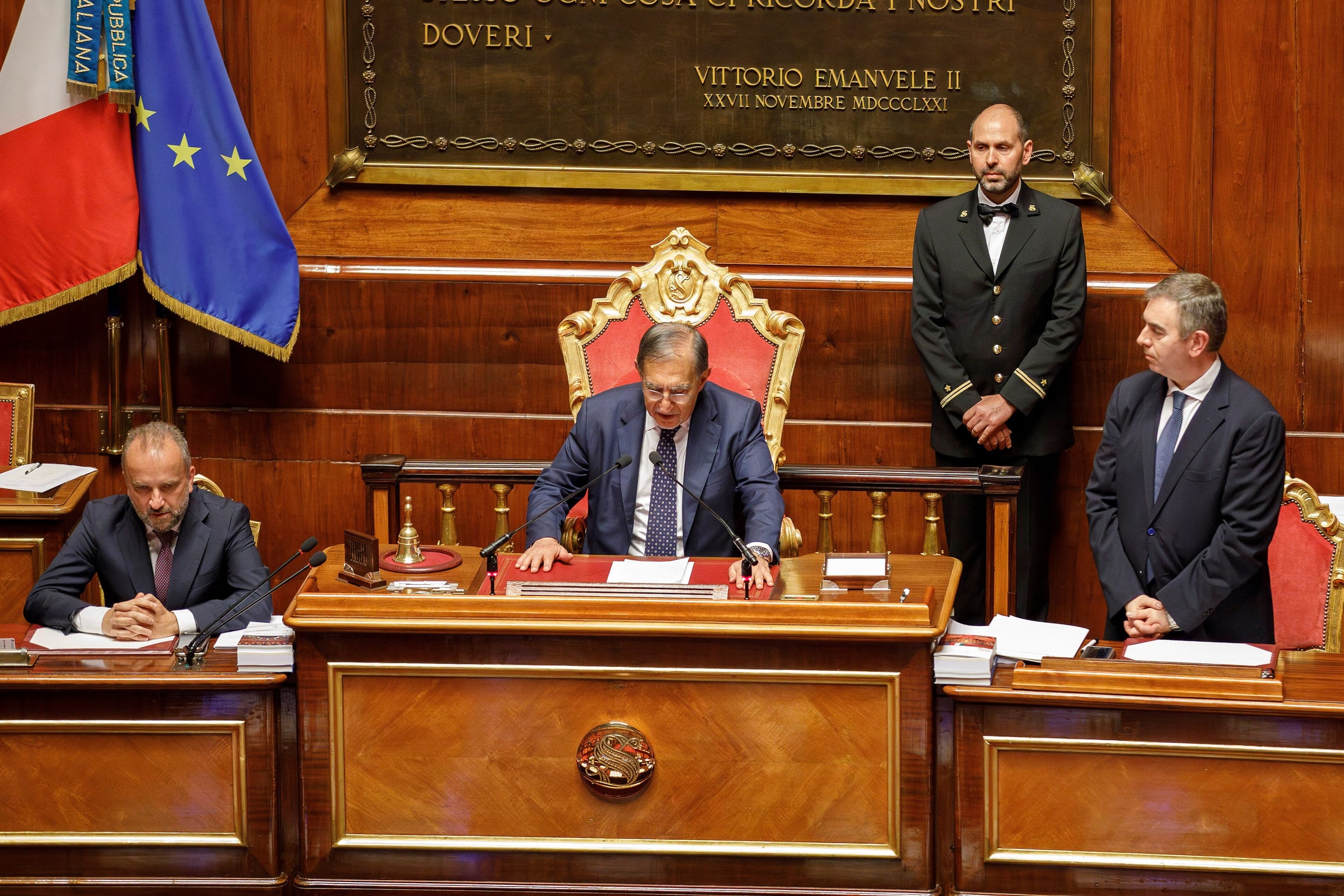
Italy’s parliament completed its legislative process on November 4, 2026, when the Senate gave unanimous final approval to a new framework for film and television. The vote was 123 in favour, none against and no abstentions, and the measure combined proposals originally put forward by the opposition Democratic Party with proposals from the governing coalition.
Culture minister Alessandro Giuli described the result as a historic achievement for Italian culture, praising the cross-party agreement and its emphasis on transparency, independent filmmaking and the protection of creative workers. The law paves the way for a restructuring of public incentives for film and television, establishes a Cinema and Audiovisual Agency, and contains new rules covering international productions, independent filmmakers, and the use of artificial intelligence in audiovisual work.
The reform follows Italy’s 2016 cinema law. Before reaching the Senate, the bill had cleared the Chamber of Deputies in September 2026, where it passed by 218 votes to 6, with backing from parties across the political spectrum. Director Pupi Avati, who had publicly appealed to Prime Minister Giorgia Meloni and opposition leader Elly Schlein to establish an independent film body, is credited by Il Foglio with inspiring the bill.
A New Agency at the Centre
The centrepiece of the reform is the Cinema and Audiovisual Agency, which will take over operational and administrative duties, including the management of public support schemes, from the culture ministry’s Directorate General for Cinema and Audiovisual. The ministry keeps political direction, strategic oversight, and inspection powers. Reports differ on the start date: Screen Daily puts the agency’s launch on January 1, 2028, while MIA Market says the transition from the directorate does not begin until 2029.
Alongside the agency, the reform establishes a permanent 16-member Cinema and Audiovisual Forum and a 20-member commission to assess projects seeking selective public funding. A National Hub for Cinema and Audiovisual will bring together the management of three institutions: the Centro Sperimentale di Cinematografia, the National Film Library, and Cinecittà.
Italy’s Cinema Fund at a Glance
The Cinema and Audiovisual Fund has a statutory minimum of 660 million euros in 2026, falling to 650 million euros in 2027 and 500 million euros a year from 2028. The current film production tax credit is 40 percent of eligible costs, capped at 20 million euros per company. The new Cinema and Audiovisual Agency is scheduled to begin operating on January 1, 2028, according to Screen Daily, while MIA Market says the transition from the culture ministry’s film directorate begins in 2029.
Tax Credits and the Financial Framework
The law does not immediately introduce new tax credit rates or eligibility conditions. The government has up to two years from the law’s entry into force, expected by the end of 2026, to approve further legislation setting out how subsidies and tax incentives will be restructured. The current production tax credit stands at a headline rate of 40 percent of eligible costs, capped at 20 million euros per company. Planned measures include three-year planning, updated annually, with clearer application windows, deadlines for decisions and more predictable payment schedules.
Under existing legislation, the statutory minimum for the Cinema and Audiovisual Fund is 660 million euros for 2026 and 650 million euros for 2027, before falling to 500 million euros a year from 2028. The reform draws on additional recovered funds of 70 million euros for 2026 and 150 million euros for 2027. However, the reform does not provide a general increase in production subsidy funding, and the Coordinamento Autori e Autrici said it failed to secure long-term funding.
International Productions and Co-Productions
The reform explicitly calls for measures to attract foreign productions, including simpler procedures for filming permits and simpler recognition of Italian nationality in international co-productions. The new agency will coordinate national policies aimed at attracting international productions and provide guidelines for regional film commissions.
The law does not itself guarantee more generous incentives for incoming productions. Its financial impact will depend on the subsequent decrees, which the government has up to two years to approve.
Italy’s parliament completed its legislative process on November 4, 2026, when the Senate gave unanimous final approval to a new framework for film and television.
Independent Film, Emerging Talent, and Worker Protections
The law sets priority support for first and second features, emerging directors, independent and smaller producers, and genre films including horror, science fiction, action, and fantasy. The government is tasked with introducing more accessible incentive procedures for television and online productions with budgets below 1.5 million euros. A national programme will work to reopen and renovate cinemas, with stronger support for independent distribution.
The legislation delegates a review of social protections for entertainment workers, including unemployment-related benefits and pension arrangements. It also contains rules addressing artificial intelligence in audiovisual production, including transparency and consent for the use of performers’ artistic contributions. The audiovisual workers’ union ASA welcomed the reform, and its general secretary Nicola De Toma praised the creation of the agency and consultative forum.
A Mixed Reception From Industry
Industry reactions have been divided, despite the unanimous parliamentary vote. The Coordinamento Autori e Autrici, which represents six organisations including 100autori, ANAC, AIR3 and Writers Guild Italia, said the legislation had ended up watering down the new agency’s real autonomy and criticised it for failing to secure long-term funding. In a statement, the group also criticised the withdrawal of proposed amendments, which were replaced with non-binding parliamentary resolutions, and warned of potential disruption from the transition to the new agency. The Audiovisual Producers Association, known as APA, also raised independence concerns. Speaking at an October hearing, APA president Chiara Sbarigia warned that without clearer powers the new body could become a twin of the current cinema directorate, with the addition of a board of directors, rather than an institution with genuine decision-making autonomy.
ANICA president Alessandro Usai, speaking during a Senate hearing in October, said regulatory and financial certainty is essential for companies to plan investments and compete in international markets. The union ASA has urged the government to move swiftly towards implementation. The government has pledged to move quickly on implementing the legislation, but the details of the revised incentive system, and the extent to which the reform delivers greater financial certainty for both Italian and international producers, remain open questions.
Sources
- Italy passes sweeping film and TV reform, with measures to attract international shoots, Screen Daily
- Italy’s Senate Passes Cinema Reform Unanimously, Establishing a National Agency, MIA Market
- Italy passes sweeping film and TV reform, with measures to attract international shoots, Yahoo Movies UK
- A cross-party ‘yes’ to the cinema bill, first tabled by Schlein and inspired by Pupi Avati, Il Foglio