
Key takeaways
- Tesla’s third-quarter revenue was flat at $28.05 billion while GAAP net income fell 43% to $787 million.
- Operating expenses rose 39% as research and development spending on AI, Optimus robots and the Cybercab grew 69%.
- Tesla lowered its capital spending guidance for 2026 to about $20 billion and secured the capacity to borrow up to $30 billion.
Tesla’s revenue in the third quarter of 2026 matched the year before, but its profit did not. The electric-car maker reported revenue of $28.05 billion on 21 October, flat from a year ago, while net income on a generally accepted accounting principles (GAAP) basis fell 43% to $787 million, or $0.22 a share.
Operating income fell 56% as spending on AI and Optimus grew faster than gross profit, Electrek reported, with research and development up 69%. Tesla is now pouring money into artificial intelligence, the Optimus humanoid robot and the driverless Cybercab, products that are only beginning production, while cutting its spending plan for the year.
A Beat on Earnings, a Fall in Profit
Tesla beat analysts’ estimates. Non-GAAP earnings came in at $0.48 per share, beating the $0.45 FactSet consensus but down 4% from $0.50 a year ago. Analysts polled by LSEG had expected 43 cents a share and revenue of $27.9 billion, according to CNBC.
Underneath, the profit picture was weaker. Operating income fell 56% to $718 million, for an operating margin of 2.6%, compared with 5.8% a year ago and 1.4% in the second quarter. Operating expenses came in at $4.78 billion, up 39% year over year, and research and development alone jumped 69% to $2.76 billion.
Stock-based compensation, which includes the 2025 pay package for chief executive Elon Musk, reached $1.17 billion, up from $663 million a year earlier. GAAP net income also included a $288 million unrealised gain on Tesla’s bitcoin holdings, partly offset by a $142 million unrealised loss on its SpaceX equity investment.
Reports differ on how to describe the profit drop. CNBC put the decline at 29%, measured against $1.11 billion, which it described as the year-earlier figure but which matches the net income Tesla reported in the second quarter of 2026; measured against the $1.37 billion of the third quarter of 2025, the fall is 43%.
Tesla’s Third Quarter in Figures
Revenue was $28.05 billion, flat from a year earlier, and GAAP net income fell 43% to $787 million. Operating income fell 56% to $718 million, a 2.6% margin. Capital spending was $4.73 billion and free cash flow $1.53 billion, and Tesla delivered 486,532 vehicles.
Better Margins, Weaker Car Revenue
There was some good news in the car business. Automotive gross margin excluding regulatory credits came in at 18.1%, up from 16.3% in the second quarter and 15.4% a year ago. Total gross margin was 19.6%, up from 18.0% a year earlier.
Revenue from cars still fell. Automotive revenue declined 3% from a year earlier to $20.56 billion, and Tesla blamed lower average selling prices and trouble securing battery supplies to build enough vehicles to fill its order backlog. The company said it ended the quarter with "the largest backlog for our passenger vehicles in four years".
Tesla delivered 486,532 vehicles in the quarter, about 2% fewer than the 497,099 a year earlier, while producing 464,391. It reported record deliveries in Canada, Australia, Japan and Taiwan. Income from regulatory credits, which other carmakers buy when they miss emissions targets, fell to $113 million from $417 million a year ago.
Energy revenue fell 16% to $2.88 billion, which Tesla partly blamed on tariff-related customer refunds, even though storage deployments rose to 13.7 gigawatt-hours from 12.5 gigawatt-hours a year earlier. Services and other revenue, which includes Supercharging, insurance and the robotaxi business, grew 33% to $4.61 billion.
Spending Plan Cut to About $20 Billion
Capital spending was $4.73 billion, more than double the $2.25 billion of a year ago, though below the $5.79 billion of the second quarter; CNBC reported a lower figure of $3.73 billion. That brought capital spending to $13.01 billion for the first nine months of 2026, against earlier guidance of more than $25 billion for the year.
On the earnings call, chief financial officer Vaibhav Taneja revised the guidance to approximately $20 billion for the current year, focused on computing infrastructure and manufacturing capacity for new product lines. He said Tesla had also secured capacity to borrow up to $30 billion to support the expected growth in capital spending, and that spending would keep expanding in the next few years as Tesla adds robotaxis, Optimus capacity, solar manufacturing, computing power and a semiconductor factory.
Free cash flow was $1.53 billion, down 62% from $3.99 billion a year earlier but a recovery from negative $1.09 billion in the second quarter. Tesla ended the quarter with $45.4 billion in cash and investments.
Free cash flow was $1.53 billion, down 62% from $3.99 billion a year earlier but a recovery from negative $1.09 billion in the second quarter.
Robots, Robotaxis and a Later Date for Self-Driving
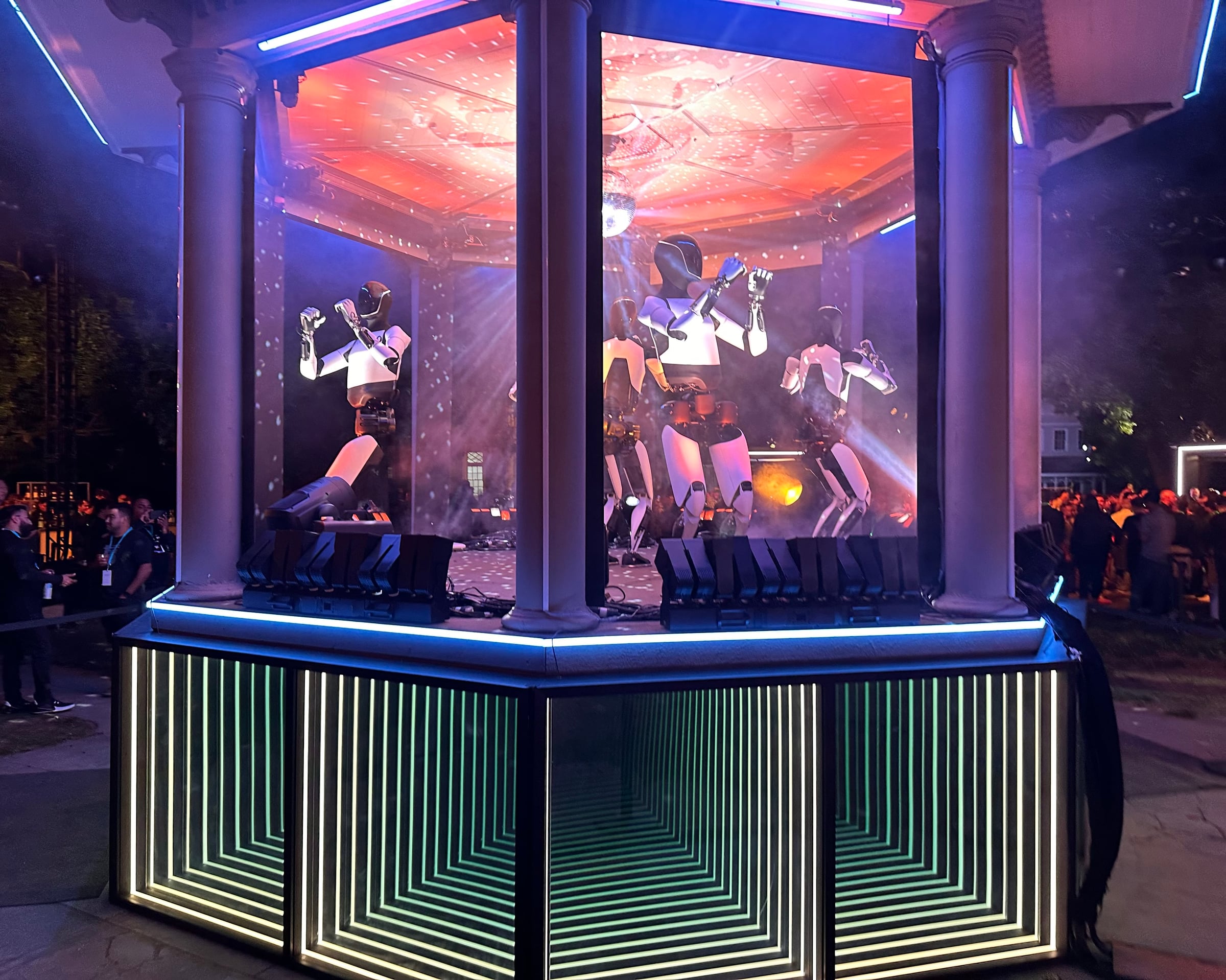
Tesla has started building Optimus on high-volume lines in Fremont, California, and its update described them as "the first production-quality bots that we have manufactured". Musk said the ramp would be "somewhat bumpy" and would probably take at least a year to reach a rate of 20,000 robots a week. He expects the remaining problems with the robot’s design, reliability and AI to be solved around the end of next year, when Tesla would start delivering Optimus to other companies.
Cybercab, a two-seat vehicle built for ride-hailing, began giving robotaxi rides in Austin, Texas, on 3 September. Ashok Elluswamy, who leads Tesla’s AI software, said rides would launch in Dallas in November. Musk said the robotaxi business would probably start to become noticeable in Tesla’s results in the second quarter of 2027 and that the vast majority of Cybercabs would be Tesla-owned and run as transport as a service.
Owners hoping their own cars will drive themselves face a longer wait. In April, Musk said the unsupervised version would probably arrive in the fourth quarter of this year, TechCrunch reported. On the call, Elluswamy said Tesla expects to let some of the first customer cars join its robotaxi fleet around the second quarter of next year. More than 75% of new vehicles delivered in North America included Full Self-Driving (Supervised), which still requires a driver watching the road, and active subscriptions rose 67% to 1.74 million, a count that Electrek notes includes upfront purchases.
The SpaceX Question and the Share Price
The results came a day after Musk told SpaceX’s quarterly call that both companies had formed special committees to discuss a possible merger. On the Tesla call he added nothing new: "I think I said everything that should be said yesterday, tap dancing through a minefield there," he said.
Tesla shares slid more than 3% in extended trading after the report, according to CNBC, and were down 14% this year, behind the rest of the largest technology stocks.
Sources
- Tesla beats on earnings and sales even as auto revenue declines, CNBC
- Tesla (TSLA) releases Q3 2026 financial results: margins rebound, profit still falls, Electrek
- Tesla Q3 2026 Earnings: US$28B Revenue as FSD Attach Rate Tops 75%, TeslaNorth
- Tesla (TSLA) Q3 2026 Earnings Call Transcript, The Motley Fool
- Tesla’s profit falls 43% as it starts building Optimus robots, The Next Web


